
Cold & Freezer Rooms Powering South Africa’s Food Distribution
Table of Contents
- Introduction
- Why Cold Storage Is the Backbone of Food Distribution
- The Real Challenges Facing South Africa’s Food Distribution Industry
- How Africhill’s Cold & Freezer Rooms Solve These Challenges
- Africhill’s Proven Impact Across Food Distribution
- Opportunities Unlocking the Future of Food Distribution
- Frequently Asked Questions
- Power the Next Stage of Your Food Distribution Growth
Introduction
Cold and freezer rooms are not optional in South Africa’s food distribution industry. They are the difference between profit and loss, growth and stagnation, food security and waste.
Across farming, bakeries, food processing plants, and distribution hubs, temperature control is the single most important factor in preserving quality, extending shelf life, and protecting margins. Research shows that more than 50 percent of fresh produce losses in South Africa occur after harvest, largely due to inadequate storage and temperature control.
The answer is clear: modular cold and freezer rooms that are fast to deploy, energy efficient, and designed for real-world African conditions.
At Africhill, we don’t just build cold rooms. We engineer high-performance cold storage solutions that keep South Africa’s food moving safely from farm to fork.
Why Cold Storage Is the Backbone of Food Distribution
Fresh produce, dairy, baked goods, meat, and prepared foods all rely on stable temperatures to maintain quality.
But food distribution is a chain – and one weak link means everything downstream suffers. Without reliable cold storage, products spoil before reaching retailers, bakeries miss delivery windows, and distributors absorb losses they can’t afford.
This is why modular cold rooms for farmers, cold storage for bakeries, and cold storage for food distribution centres are critical infrastructure not operational extras.
Cold and freezer rooms allow food businesses to control timing. Farmers can harvest at peak quality and store produce safely. Bakeries can manage dough, fillings, and finished products without waste. Distribution centres can consolidate stock, stabilise supply, and reduce last-mile losses.
When cold storage works, food distribution flows.
The Real Challenges Facing South Africa’s Food Distribution Industry
South Africa’s food distribution sector faces a unique mix of pressure points. These challenges affect businesses of every size, from small-scale farmers to national distributors.
High Post-Harvest and Post-Production Losses
Studies consistently show that a significant portion of food produced in South Africa never reaches consumers. Poor storage conditions, inconsistent temperatures, and delays between production and distribution all contribute to waste.
For farmers, this often means losing value before produce even enters the supply chain. For bakeries and processors, it means rejected batches, expired stock, and reduced margins.
Infrastructure Gaps Across the Supply Chain
Many food businesses operate in areas where purpose-built cold storage infrastructure is limited or outdated. Traditional storage options are slow to build, difficult to adapt, and expensive to scale.
As demand fluctuates seasonally, businesses are left with either too little storage or unused space that drains resources.
Tight Timelines and Operational Pressure
Food distribution does not pause. Delays in building or expanding cold storage directly affect operations. Waiting weeks or months for new facilities is not practical when production continues daily.
Energy Costs and Efficiency Concerns
Electricity costs remain a major operational expense. Poorly insulated cold rooms increase energy usage, eroding profitability over time.
Safety and Disruption During Construction
Food environments require clean, controlled spaces. Long, disruptive construction projects introduce risk, downtime, and compliance headaches.
These challenges are interconnected. Solving them requires cold storage solutions that are fast, flexible, efficient, and built for real food distribution environments.
How Africhill’s Cold & Freezer Rooms Solve These Challenges
Africhill’s modular cold and freezer rooms are designed specifically to address the realities of food distribution in South Africa and across Sub-Saharan Africa.
Built for Speed When Time Matters
Our short manufacturing lead times and fast construction times mean a 9m x 9m cold or freezer room can be operational in as little as three days.
This speed allows farmers, bakeries, and distributors to respond immediately to demand, seasonal peaks, or expansion needs without interrupting daily operations.
Designed Around Your Products
No two food businesses store the same products. Fresh fruit, leafy vegetables, dairy, baked goods, and frozen foods all have different temperature and handling requirements.
Africhill designs cold and freezer rooms according to your specific product needs. Whether you require stable environments between -20 and 8°C or specialised blast chilling capacity, our in-house engineers sign off each solution to ensure it fits your operation precisely.
Modular Construction That Works Inside Active Facilities
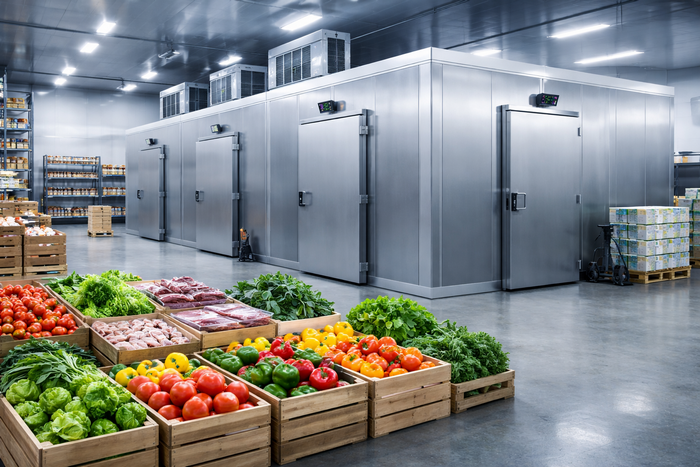
Cold rooms and freezer rooms are usually built inside warehouses, factories, shops, containers, and existing structures.
Our modular construction approach creates neater, quieter, and safer sites, reducing disruption and potential safety risks in active food environments. This is particularly important for bakeries and distribution centres where hygiene and continuity are critical.
Energy Efficiency That Protects Your Margins
Our strong, thermal resistant modular and prefab panels deliver excellent energy efficiency throughout the year. Highly effective insulation reduces heat transfer, helping to lower electricity consumption and stabilise operating costs over time.
Built to Last in Demanding Environments
Africhill panels are manufactured in-house using high-density EPS cores bonded to Chromadek steel.
Using only quality materials, we design and manufacture insulated thermal panels to the highest standards, approved against the same standards as traditional building materials.
This ensures long-term durability and minimal maintenance, even in demanding food distribution environments.
Africhill’s Proven Impact Across Food Distribution
Africhill’s experience spans the full food distribution chain, across multiple countries and product types.
In Zimbabwe, Africhill has supported dairy operations by delivering cold and freezer rooms that preserve milk and dairy products during storage and distribution, helping reduce spoilage and stabilise supply.
In Angola, fruit handling and export operations have relied on Africhill cold storage to maintain quality between harvest and market, protecting value in high-temperature conditions.
In South Africa, Africhill cold storage solutions have supported bakeries by creating controlled environments for dough, fillings, and finished baked goods, allowing consistent production and reduced waste.
These are just a few examples, across many other food-related industries, Africhill has delivered modular cold and freezer rooms that adapt to the needs of food processors, packhouses, and distribution centres without disrupting operations.
This breadth of experience allows us to understand food distribution challenges at every stage, not just in theory, but in practice.
Africhill’s Benefits for Food Distribution Businesses
At Africhill, we don’t just build cold rooms. We engineer high-performance cold storage solutions designed for maximum durability and efficiency.
Our strong, thermal resistant modular and prefab panels for top quality cold and freezer rooms offer the following advantages for food distribution businesses:
1. Tailored solutions that understand local industry challenges
We have manufactured and installed a wide range of cold room solutions and have deep expertise in catering to specific refrigeration requirements and regional applications.
2. Highly customised solutions
From industrial cold rooms to DIY and mobile refrigeration solutions, we provide exactly what you require. Our in-house engineers ensure your operational needs are met with minimal compromise.
3. Fast manufacturing and construction times
A simple 9m x 9m cold or freezer room can be operational in approximately three days, making it ideal for tight schedules where time is money.
4. Safer, neater construction environments
Our modular construction sites reduce workplace disruption and potential safety risks, particularly important in food production and distribution settings.
5. Excellent energy efficiency
Highly effective insulation helps significantly reduce electricity costs and improve long-term operational budgets.
6. Excellent quality and durability
We use only quality materials and manufacture our own insulated thermal panels to deliver long-term reliability and minimal maintenance.
7. In-house panel manufacturing
Africhill panels are produced using high-density EPS cores bonded to Chromadek steel and approved against traditional safety and building standards.
8. Minimal maintenance requirements
Our cold rooms are designed to last and require virtually no maintenance, allowing you to focus on your core business.
9. Superb service
Our best practices have been refined over more than 20 years, ensuring expert advice and dependable support throughout your project.
10. End-to-end or DIY flexibility
You can erect the structure with the help of a handyman, or our agents across Sub-Saharan Africa can deliver a complete turnkey solution.
11. Product-specific refrigeration design
We design refrigeration capacity according to your products, whether you need blast chilling or stable storage environments.
12. Africa-wide delivery capability
From our factory in Kempton Park, Johannesburg, South Africa, we deliver modular cold and freezer rooms anywhere in Sub-Saharan Africa.
Opportunities Unlocking the Future of Food Distribution
South Africa’s food distribution sector is evolving. Urbanisation, export growth, and rising consumer expectations are reshaping how food moves from producer to consumer.
Cold storage is central to this shift.
Reducing Food Waste at Scale
Even small reductions in post-harvest and post-production losses can translate into massive economic gains.
Modular cold rooms for farmers and distributors provide immediate control over quality and timing.
Supporting Growing Bakery and Processed Food Demand
Cold storage for bakeries allows better production planning, improved consistency, and reduced waste. As demand grows, modular systems allow bakeries to scale without rebuilding infrastructure.
Strengthening Local and Regional Supply Chains
With reliable cold storage, food distributors can consolidate stock, stabilise supply, and service wider regions without compromising quality.
Creating More Resilient Food Systems
Modular cold and freezer rooms give food businesses the flexibility to respond to seasonal changes, market demand, and expansion opportunities without being locked into rigid infrastructure.
Frequently Asked Questions
Why is cold storage important in food distribution?
Cold storage preserves food quality, extends shelf life, reduces waste, and allows distributors to manage supply more efficiently.
What types of food benefit from cold and freezer rooms?
Fresh produce, dairy, baked goods, meat, and processed foods all rely on controlled temperatures to maintain quality.
How quickly can Africhill install a cold room?
A standard modular cold or freezer room can be operational in as little as three days, depending on specifications.
Can Africhill deliver cold rooms outside South Africa?
Yes. We deliver modular cold and freezer rooms across Sub-Saharan Africa from our Johannesburg-based factory in South Africa.
Power the Next Stage of Your Food Distribution Growth
Even small reductions in post-harvest and post-production losses can translate into substantial increases in profitability.
If you are looking to reduce waste, improve efficiency, and strengthen your food distribution operations, we are ready to help.
At Africhill, we don’t just build cold rooms. We engineer high-performance cold storage solutions designed for maximum durability and efficiency.
Fill in the form below and let’s design the cold storage solution that powers your food distribution future.
Sources consulted
Postharvest Losses Among Smallholder Fruit Crop Farmers in South Africa
Authors: Vhahangwele Belemu & Isaac Busayo Oluwatayo
Publisher: Circular Agricultural Systems, 2025
Summary: This peer-reviewed study found that over 50% of smallholder fruit farmers in South Africa experience significant post-harvest losses due to inadequate storage, handling, and logistics infrastructure. The report identifies improved cold storage access as a key intervention to reduce waste and improve food distribution efficiency.
https://maxapress.com/data/article/cas/preview/pdf/cas-0025-0008.pdf
Modeling the Critical Causal Factors of Postharvest Losses in Vegetable Supply Chains
Authors: Siphesihle Qange et al.
Publisher: Heliyon (Elsevier), 2024
Summary: This study analyses South African vegetable supply chains and identifies inadequate cold storage, poor transport conditions, and limited infrastructure as primary contributors to food loss. It concludes that investment in cold chain systems is essential for improving food distribution sustainability and economic resilience.
https://www.sciencedirect.com/science/article/pii/S240584402415596X
South Africa Cold Chain for Fresh Produce Market
Publisher: Ken Research
Summary: This market research report estimates South Africa’s cold chain for fresh produce market at approximately USD 1.2 billion in 2024, highlighting infrastructure gaps, high spoilage rates, and limited rural cold storage as major challenges. The report notes strong growth opportunities through scalable and modular cold storage solutions.
https://www.kenresearch.com/south-africa-cold-chain-for-fresh-produce-market